How to Use Before/After Photos to Generate Hardscape Leads on Google and Social
Your completed projects are your best marketing asset. Here is how to capture, organize, and deploy before and after content across Google, Instagram, Pinterest, and your website to generate consistent hardscape leads.
How to Use Before/After Photos to Generate Hardscape Leads on Google and Social
From Fannit's experience: Hardscape is one of the few trades where the work sells itself, if you capture it right. The contractors we work with who generate the most leads from their portfolio are not the ones doing the most projects. They are the ones who treat every job site like a content shoot. A single well-photographed patio can generate leads for three years on Google Images, Houzz, and Pinterest. Most contractors leave that on the table entirely.
If you run a hardscaping company, your best marketing asset is already sitting on your job sites. Every completed patio, retaining wall, and outdoor kitchen is a before-and-after story that can generate leads for years. The problem is that most hardscape contractors either don't capture this content systematically, or they capture it but don't use it in a way that actually drives business.
This guide is about changing that. We'll cover how to capture before-and-after content properly, how to use it across Google, social media, and your website to generate leads, and how to build a system that compounds over time so your portfolio becomes one of your most powerful sales tools.
Why Before/After Content Works Differently for Hardscaping
Before-and-after content works for almost every home service category, but it works especially well for hardscaping for a specific reason: the transformation is dramatic and immediately visible.
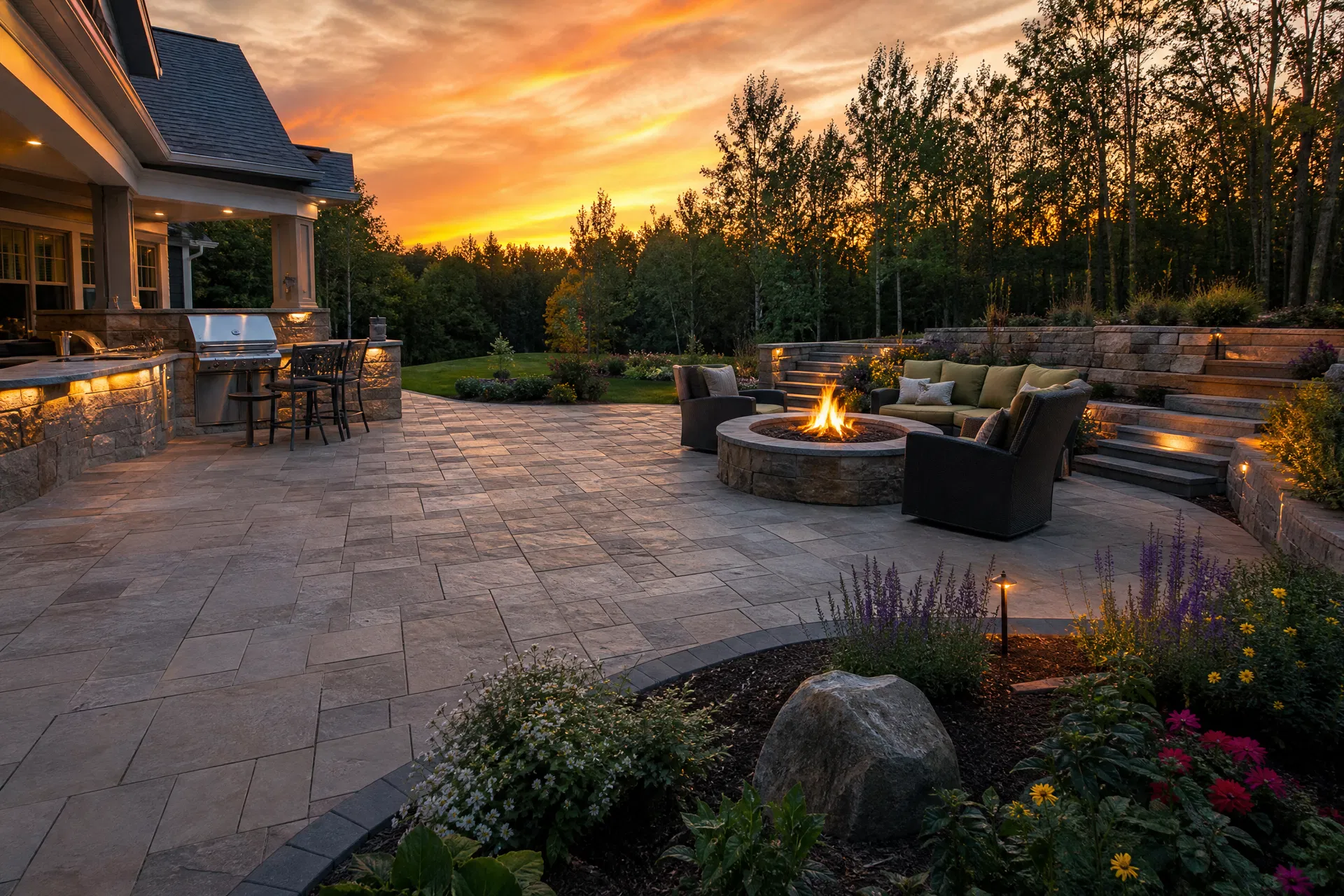
When a homeowner sees a before photo of a cracked concrete slab and overgrown backyard next to an after photo of a beautiful natural stone patio with an outdoor kitchen and fire pit, they don't need to be sold on the concept. The photo does the selling. The homeowner looks at the after photo and thinks "I want that." Your job at that point is simply to be the company they contact.
This is fundamentally different from categories like HVAC or plumbing, where the work is largely invisible and the value is functional rather than aesthetic. Hardscaping is one of the few home service categories where the work itself is the marketing. A single great project photo, placed in front of the right audience, can generate multiple leads.
The companies that understand this and build their marketing around it consistently outperform competitors who rely primarily on paid search or generic SEO.
Capturing Before/After Content the Right Way
The quality of your before-and-after content determines how effective it is as a marketing tool. The Interlocking Concrete Pavement Institute publishes installation standards that homeowners increasingly reference when evaluating contractors - and when you reference those standards in your project captions, it signals expertise to the homeowners who have done their research. A blurry phone photo taken in poor light will not generate leads. A well-composed, properly lit photo that shows the full scope of the transformation will.
You don't need a professional photographer for every job, but you do need a consistent process. Here's what that process looks like for a hardscaping company that takes content seriously.
Before the project starts, take a set of photos from three to four fixed positions: a wide shot showing the full area to be transformed, a mid-range shot showing the key problem area (the cracked concrete, the overgrown slope, the bare dirt), and a close-up of any specific detail that will be dramatically improved. Note the exact positions so you can replicate them for the after shots.
During the project, capture progress photos. These are valuable for social media content and for demonstrating the complexity and craftsmanship of your work. A time-lapse or short video of a retaining wall being built is compelling content that most competitors don't produce.
After the project is complete, return to the same positions and take the after photos. Shoot at golden hour if possible, when the light is warm and the shadows add depth. If the project includes landscape lighting, shoot after dark as well. Clean the site thoroughly before shooting. Remove equipment, debris, and anything that distracts from the finished work.
For your most impressive projects, consider hiring a real estate or architectural photographer for a half-day shoot. The investment of $300 to $500 produces images that will generate leads for years and are worth far more than their cost.
Using Before/After Content on Google
Google is where homeowners go when they're ready to hire a hardscape contractor. Your before-and-after content should be working for you in every place Google surfaces it.
Google Business Profile Photos
Your Google Business Profile is often the first visual impression a homeowner gets of your company. Most contractors upload a handful of photos and forget about it. The companies that win on Google Maps have 50 to 100 photos, updated regularly, showing a diverse range of completed projects.
Upload your best before-and-after pairs to your GBP. Google doesn't have a native before-and-after format, so upload the after photos as your primary portfolio images and include the before photos as context. Write descriptive captions that include location-specific language ("Paver patio installation in [neighborhood], [city]") because this helps with local search relevance.
Frequency matters. Google's algorithm favors active profiles. Uploading new photos every two to four weeks signals that your business is active and engaged. Set a reminder to upload new project photos consistently.
Website Portfolio Pages
Your website portfolio is where before-and-after content can do its most powerful work. A well-organized portfolio page, with projects organized by type (patios, retaining walls, outdoor kitchens, fire pits) and by neighborhood or city, serves multiple purposes simultaneously.
It gives homeowners the visual proof they need to move forward. It demonstrates the range and quality of your work. And it creates SEO value through location-specific content. A project page titled "Natural Stone Patio Installation in [Neighborhood], [City]" with detailed before-and-after photos and a description of the work will rank for local searches that your competitors' generic portfolio pages won't capture.
Each project page should include the before-and-after photos, a brief description of the project scope and the homeowner's goals, the specific materials used, and a call to action to request a similar project. If the homeowner gave permission, include their name and a brief quote about the experience. The hardscape portfolio sales guide covers how to organize these project pages so they function as a sales tool during the in-person estimate, not just as a passive website gallery.
Google Ads with Visual Assets
Google's Performance Max campaigns allow you to include image assets that appear across Google's network, including YouTube, Gmail, and the Display Network. Your best before-and-after photos, used as image assets in these campaigns, can reach homeowners who are in the early stages of thinking about outdoor living improvements.
The targeting for these campaigns should focus on homeowners in your service area who have shown interest in home improvement, outdoor living, or landscaping. The creative should lead with the after photo and include a clear call to action.
Using Before/After Content on Social Media
Social media is where before-and-after content reaches homeowners who aren't actively searching for a contractor yet. It creates demand rather than capturing existing demand, and it builds brand awareness that pays dividends when those homeowners are ready to hire.
Instagram and Facebook
Instagram is the most natural platform for hardscape before-and-after content because it's built around visual storytelling. A well-executed before-and-after post, with a compelling caption that tells the story of the project, consistently generates high engagement and reach.
The format that works best is a carousel post: the first image is the dramatic after photo (the one that stops the scroll), the second is the before photo, and subsequent images show details of the finished work. The caption should tell the story: what the homeowner wanted, what challenges the project presented, and what the result means for how they'll use their outdoor space.
Consistency is more important than perfection. A company that posts two to three times per week, with a mix of before-and-after reveals, progress photos, and behind-the-scenes content, will build a following and generate leads over time. A company that posts sporadically, even with higher-quality content, will not.
Facebook remains important for hardscaping companies because of its targeting capabilities for paid promotion. A before-and-after post that performs well organically can be boosted to reach homeowners in specific zip codes who match your ideal customer profile. The combination of organic reach and paid amplification is more cost-effective than running cold traffic campaigns.
Pinterest is underused by most hardscape contractors and represents a significant opportunity. Homeowners use Pinterest extensively during the planning phase of outdoor living projects. They're creating boards of inspiration, saving images of patios and outdoor kitchens they want to replicate.
A hardscape company with a well-maintained Pinterest presence, with boards organized by project type and style, can capture homeowners at the very beginning of their planning process. Unlike Instagram, where content has a short shelf life, Pinterest pins continue to drive traffic for months and years after they're posted.
The key to Pinterest success is organization and keyword optimization. Name your boards with the terms homeowners actually search for ("Backyard Patio Ideas," "Natural Stone Retaining Walls," "Outdoor Kitchen Designs"). Write pin descriptions that include location-specific language and link back to the relevant project page on your website.
Video Content
Short-form video is the highest-performing content format on social media right now, and before-and-after reveals are particularly well-suited to the format. A 30 to 60 second video that starts with the before, walks through the transformation, and ends with the completed project generates significantly more reach and engagement than a static photo post.
These videos don't need to be elaborate. A simple sequence of before photos, progress clips, and after footage, set to music and cut to rhythm, is compelling and shareable. Post them on Instagram Reels, Facebook Reels, and TikTok. The reach potential on short-form video is significantly higher than static posts, and the algorithm rewards consistent posting.
Building a System That Compounds
The hardscape companies that generate the most leads from before-and-after content are the ones that treat it as a system, not a one-time effort. Here's what that system looks like.
Every project gets documented. This is a non-negotiable part of your process, not an optional add-on. Assign one person on your crew the responsibility of capturing before photos at the start of every job and after photos at completion. Make it part of the project checklist.
Content is processed and published on a schedule. Don't let project photos sit on a phone or hard drive. Establish a weekly or bi-weekly content processing routine where photos are edited, organized, and queued for publication. The best time to accelerate this system is in the fall and winter, when you are building the content library that will power your spring booking campaigns.
Performance is tracked. Which project types generate the most engagement? Which platforms drive the most website traffic? Which posts generate direct messages or contact form submissions? Track these metrics and use them to refine your content strategy over time.
The compounding effect of this system is significant. A hardscape company that has been consistently publishing before-and-after content for two years has a portfolio of hundreds of pieces of content, each of which continues to drive organic traffic and social reach. That portfolio is a competitive moat that new competitors cannot quickly replicate.
Fannit's hardscape marketing program is built around the visual content system described in this guide - the documentation process, the platform distribution, and the SEO strategy that turns project photos into a compounding lead generation asset. If you want to talk through what that looks like for your company, schedule a free strategy call.
Visual content is the foundation of hardscape marketing. The best hardscape marketing agencies that understand this treat before/after photography as a core deliverable, not an afterthought.
Frequently Asked Questions
Do I need to get homeowner permission before using before-and-after photos?
Yes, and you should make this part of your contract or a simple written release. Most homeowners are happy to allow their project to be used in your marketing, especially if you offer to tag them or send them the photos. Having a signed release protects you and ensures you can use the content across all channels without concern.
How many photos should I take per project?
For a typical patio or retaining wall project, aim for 20 to 30 photos: a set of before shots from multiple angles, progress photos at key stages, and a comprehensive set of after shots including wide angles, mid-range, and detail shots. For larger or more complex projects, more is better.
What time of day is best for after photos?
The hour after sunrise and the hour before sunset (golden hour) produce the most visually compelling photos because the light is warm and directional. Midday light is harsh and flat. If your project includes landscape lighting, shoot after dark as well for a completely different and often stunning perspective.
How do I get more engagement on my before-and-after posts?
Tell a story in the caption rather than just describing the work. Include the homeowner's goals, any challenges the project presented, and what the finished space means for how they'll use it. Ask a question at the end to encourage comments. Tag the location. Use relevant hashtags. And post consistently, because the algorithm rewards accounts that publish regularly.

Keith Eneix is the Co-Founder and President of Fannit, a digital marketing agency built exclusively for home service contractors. He still owns and operates a multi-seven-figure contracting business in the Pacific Northwest. Since 2010, Fannit has helped 200+ contractors generate $100M+ in documented revenue.
Full Bio

