The Hardscape Spring Booking Strategy: How to Fill Your Calendar Before the Season Starts
Most hardscape companies spend January and February waiting for the phone to ring. The best ones spend those months filling their spring calendar so completely that by March they are turning work away.
The Hardscape Spring Booking Strategy: How to Fill Your Calendar Before the Season Starts
Most hardscape companies spend January and February waiting for the phone to ring. The best ones spend those months filling their spring calendar so completely that by March they are turning work away.
The difference is not luck or market size. It is a deliberate pre-season marketing strategy that starts in the fall and runs through the winter. Companies that execute this strategy consistently enter spring with a full pipeline, better crews because they can plan ahead, and higher average tickets because they are not competing on price to fill gaps.
This post covers the mechanics of that strategy.
Why Hardscape Has a More Predictable Seasonal Pattern Than Other Trades
Hardscape is one of the most seasonally predictable trades in home improvement. In most markets, the installation season runs from April through October. Homeowners who want a patio, retaining wall, or outdoor kitchen for summer entertaining need to book in March or April at the latest to have the project done before the season peaks.
This predictability is an advantage if you use it. You know when demand will surge. You know when homeowners are making decisions. You can build your marketing calendar around this cycle and be in front of homeowners at exactly the right moment.
The companies that miss this window are the ones that start marketing in April when homeowners are already ready to book. By then, the homeowners who planned ahead have already chosen a contractor. You are competing for the homeowners who waited, and those homeowners are more likely to be shopping on price.
The Pre-Season Marketing Timeline
The most effective hardscape pre-season marketing follows a specific timeline.
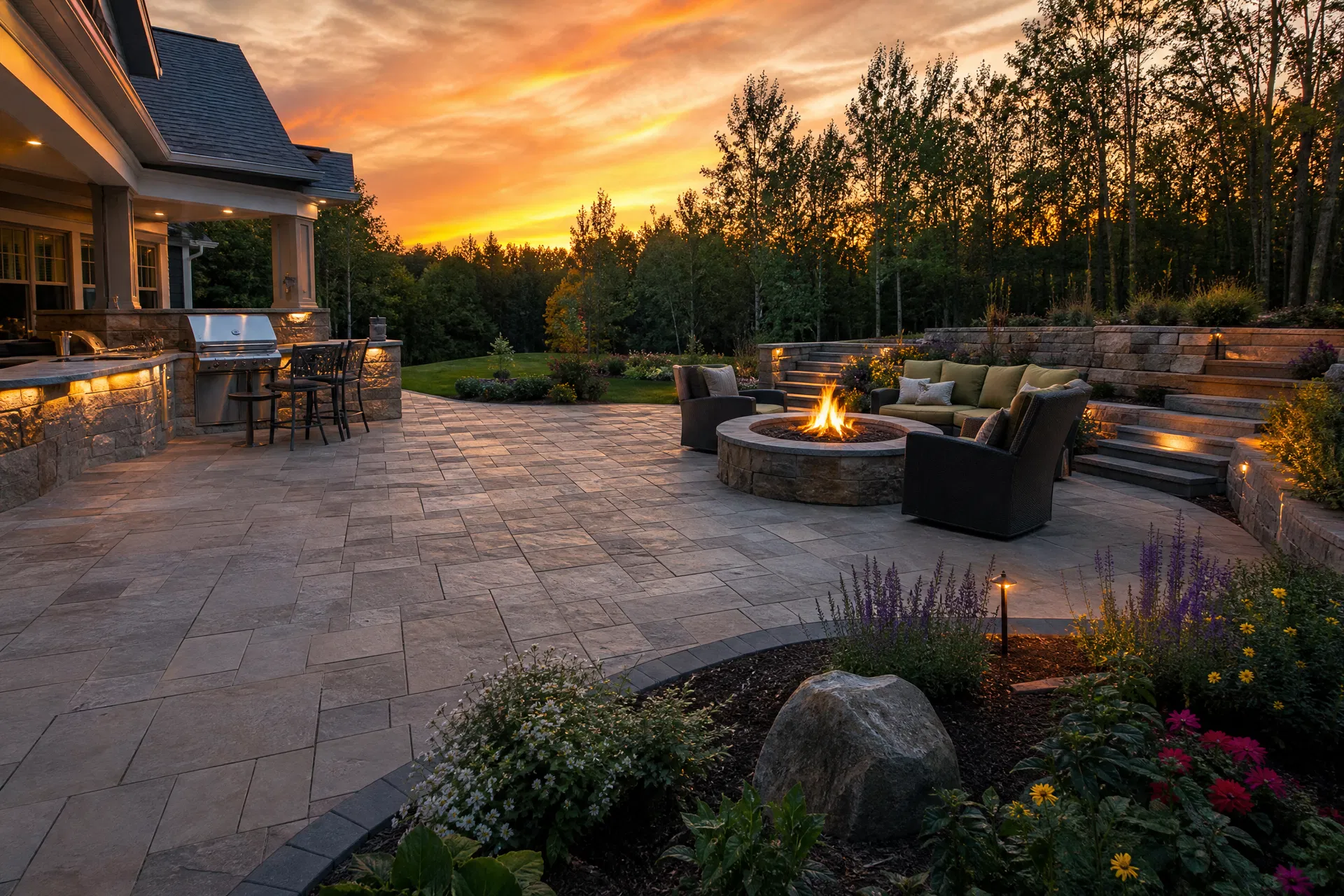
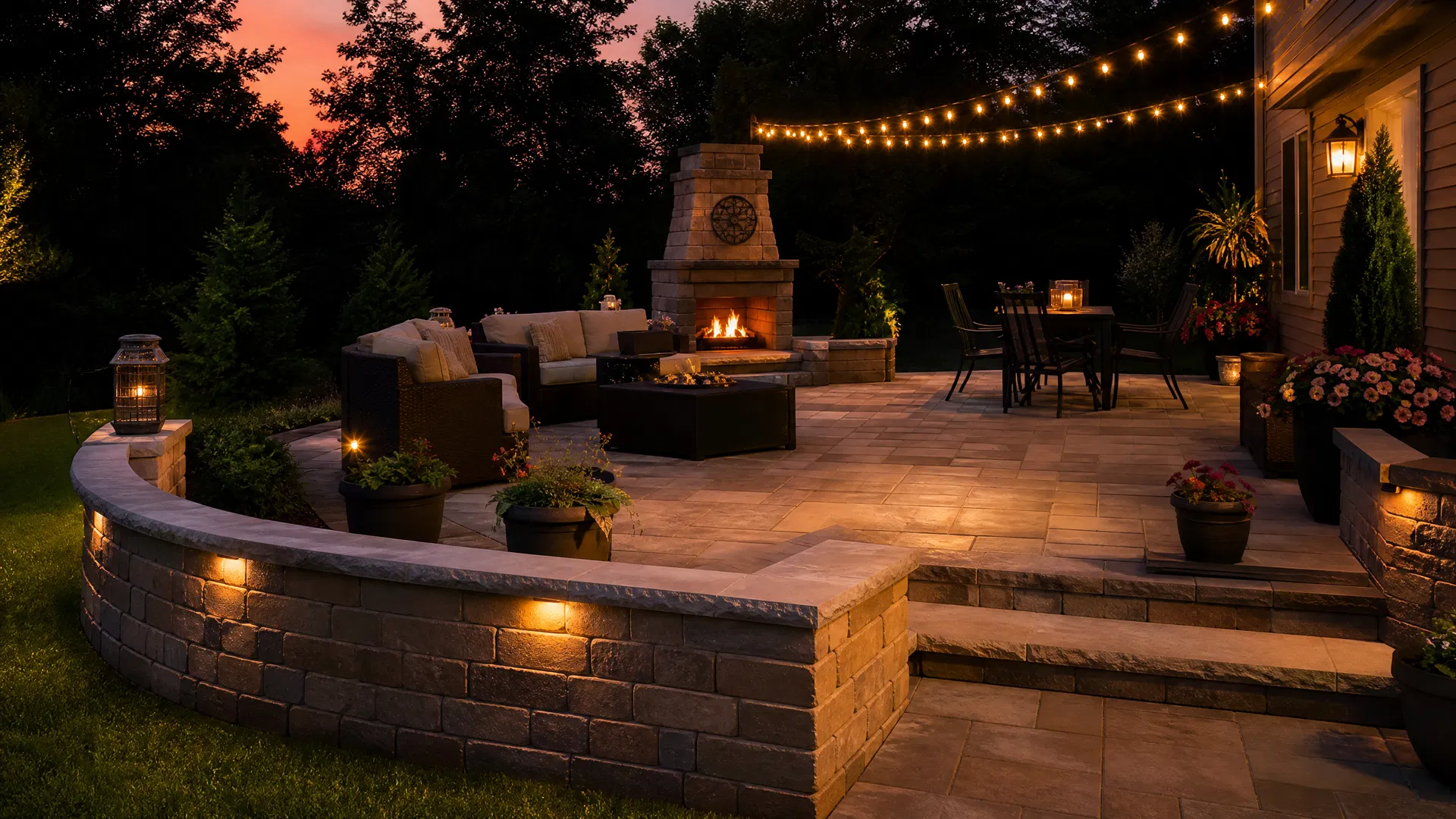
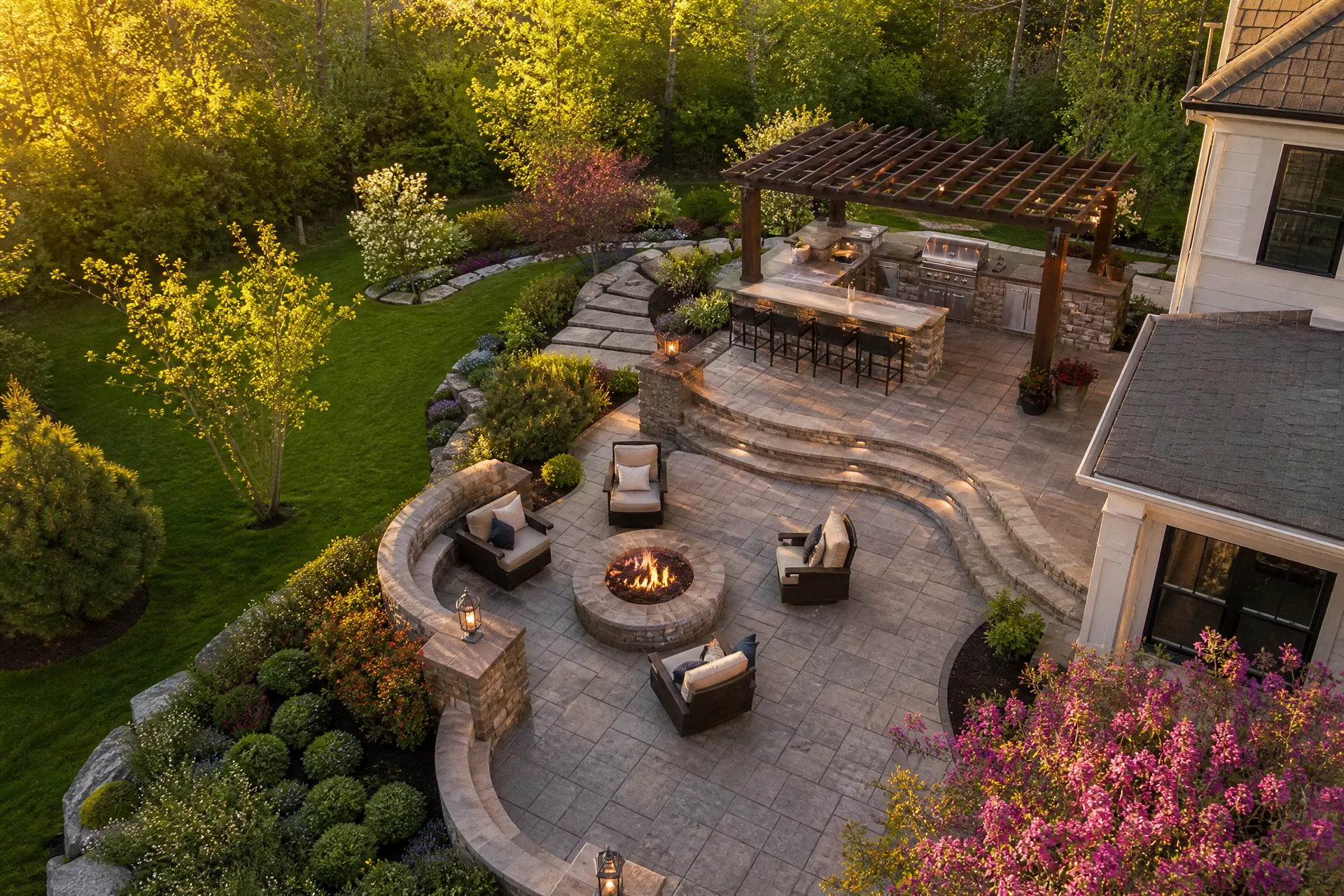
October and November: Plant the seed. Homeowners are wrapping up their outdoor season and starting to think about what they wish they had done differently. This is the ideal time to run retargeting ads to your website visitors from the past year, send an email to your past customer list about booking early for next spring, and post project photos on social media that show the finished outdoor living spaces your customers enjoyed all summer. The goal is not to generate immediate leads. The goal is to get on the radar of homeowners who are starting to think about a project. A strong project portfolio is the most effective creative asset for this phase - homeowners in the dreaming stage respond to finished project photos more than any other content type.
December and January: Build the pipeline. This is when homeowners who are serious about a spring project start their research. Your marketing should shift to lead generation. Run Google Ads targeting "patio contractor near me" and "outdoor kitchen installation" searches. Increase your social media ad spend with project portfolio content. Send a direct mail piece to your target neighborhoods with a specific early-booking offer. The goal is to generate consultations that you can schedule for January and February.
February and March: Close the calendar. By February, homeowners who want a project done by summer are feeling urgency. They know contractors book up. Your marketing should emphasize your booking calendar and the benefits of scheduling early. A specific early-booking incentive, whether that is a price guarantee, a priority scheduling commitment, or a complimentary design consultation, gives homeowners a reason to act now rather than wait.
April through June: Execute and generate referrals. Once your calendar is full, shift your marketing focus to job site documentation and referral generation. Every project you complete is a marketing asset. Document it with photos and video. Ask for a review and a referral from every satisfied customer. The referrals you generate during peak season will fill your fall calendar.
The Early-Booking Offer: What Works and What Does Not
An early-booking offer is a specific incentive designed to get homeowners to commit to a project before the season starts. The most effective early-booking offers share a few characteristics.
They have a clear deadline. "Book by February 28 and receive a complimentary design consultation" is more compelling than a vague "book early and save." The deadline creates urgency without requiring you to discount your price.
They offer genuine value without discounting your core service. A complimentary design consultation, a project planning guide, or a priority scheduling guarantee are all offers that homeowners value without requiring you to reduce your margin. Discounting your installation price to fill your calendar trains homeowners to wait for discounts and devalues your work.
They are communicated through multiple channels. An early-booking offer that only appears on your website will reach a fraction of the homeowners who would respond to it. Promote it through email, social media, direct mail, and your Google Ads. The more channels you use, the more homeowners you reach.
Building a Pre-Season Email Campaign
Your past customer list is your most valuable marketing asset for pre-season booking. These homeowners already know your work, trust your company, and are likely to refer you to neighbors if you stay in touch.
A pre-season email campaign to past customers should include three to four emails sent between November and February. The first email, sent in November, should be a warm check-in that shares a few project photos from the past season and mentions that you are starting to book for spring. The second email, sent in January, should introduce your early-booking offer and include a clear call to action to schedule a consultation. The third email, sent in February, should create urgency by mentioning that your spring calendar is filling up and the early-booking offer deadline is approaching.
This sequence works because it is not aggressive. It is helpful. You are giving past customers the information they need to plan ahead, not pressuring them to buy something they do not need.
Social Media Strategy for Pre-Season Lead Generation
Instagram and Pinterest are the most effective social media platforms for hardscape pre-season marketing because they are visual platforms where homeowners actively search for outdoor living inspiration.
In the fall and winter, post project photos that show the finished outdoor spaces your customers enjoyed during the past season. Include captions that describe the project scope, the materials used, and the transformation from the before state. Tag your location and use relevant hashtags. These posts serve two purposes: they keep your company visible to homeowners who follow you, and they appear in search results when homeowners are looking for inspiration.
In January and February, shift your social media content to a mix of project photos and direct response content. A post that says "Our spring calendar is filling up. We have three consultation spots available in February for homeowners who want their project done before summer. Comment below or send us a message to schedule." This type of post generates direct inquiries from homeowners who are ready to move forward.
Paid social media ads in January and February can significantly amplify your reach. A $500 to $1,000 monthly budget on Facebook and Instagram, targeted to homeowners in your service area who have shown interest in home improvement content, can generate 10 to 20 consultation requests per month during the pre-season window. The most effective creative for these campaigns is before/after project content - the hardscape before/after photo marketing guide covers how to build the content library that makes these campaigns convert.
How to Price Pre-Season Work
One of the most common questions hardscape companies ask about pre-season marketing is whether they need to offer a discount to get homeowners to book early. The answer is almost always no.
Homeowners who book early are not booking early because of a discount. They are booking early because they want to be sure they can get the project done before summer, they want to work with a specific contractor they trust, or they have been planning the project for months and are ready to move forward. These homeowners are not price-sensitive in the way that late-season homeowners who are trying to fill gaps in your calendar might be.
The value proposition for early booking is certainty, not price. You can guarantee a specific start date. You can guarantee that you will have the crew capacity to give their project proper attention. You can guarantee that the materials they want will be available. These are genuine benefits that homeowners value, and they do not require you to reduce your margin.
Tracking Pre-Season Marketing Performance
The metrics that matter for pre-season marketing are different from the metrics that matter during peak season. During pre-season, the goal is to fill your calendar with qualified consultations. The key metrics are consultation requests generated, consultations completed, and proposals accepted.
Track where each consultation request came from. Was it an email to past customers? A social media ad? A Google Ad? Direct mail? This data tells you which channels are generating the highest-quality leads and where to invest more in future pre-season campaigns.
Track your consultation-to-proposal rate. If you are completing consultations but not generating proposals, the problem is in the consultation process, not the marketing. If you are generating proposals but not closing them, the problem is in the proposal or the follow-up process.
Fannit's hardscape pre-season marketing program is built around the February-to-April booking window covered in this guide - the content calendar, the early-booking offer structure, and the paid advertising timeline that fills your spring schedule before your competitors have started their campaigns. If you want to talk through what that looks like for your company and market, schedule a free strategy call.
Pre-season marketing is a timing game. The best hardscape marketing agencies that win it are the ones who start building awareness in October and November, not March.
Frequently Asked Questions
When is too early to start pre-season marketing?
October is not too early. Homeowners who want a major outdoor living project done by summer start thinking about it in the fall. Certification from the Interlocking Concrete Pavement Institute is a useful pre-season differentiator - homeowners who have done their research recognize it, and it gives your early-booking messaging a credibility signal that competitors without certification cannot match. Being in front of them in October and November, when they are in the dreaming and planning phase, puts you in a strong position when they are ready to book in January and February.
What if I am in a market with a shorter installation season?
In markets with shorter seasons, the pre-season window is compressed but the strategy is the same. If your installation season runs from May through September, start your pre-season marketing in December and focus your early-booking push in February and March. The key is to be in front of homeowners before your competitors are.
How do I handle homeowners who want to book but are not sure about their design yet?
A complimentary design consultation is the ideal offer for homeowners who are interested but not ready to commit to a specific scope. The consultation gives them a concrete next step that does not require them to make a final decision, and it gives you the opportunity to build a relationship and guide them toward a proposal. Many of the best hardscape projects start as a vague idea that gets refined through the consultation process.

Keith Eneix is the Co-Founder and President of Fannit, a digital marketing agency built exclusively for home service contractors. He still owns and operates a multi-seven-figure contracting business in the Pacific Northwest. Since 2010, Fannit has helped 200+ contractors generate $100M+ in documented revenue.
Full Bio