How to Turn Your Hardscape Portfolio Into Your Best Sales Tool
Most hardscape contractors have a portfolio. Few have a sales tool. The difference is in how the work is documented, organized, and deployed at every stage of the sales process. Here is how to close more jobs with the work you have already done.
How to Turn Your Hardscape Portfolio Into Your Best Sales Tool
Hardscape is a visual trade. A homeowner who is considering a $40,000 patio, retaining wall, and outdoor kitchen project cannot fully imagine the finished result from a verbal description or a line-item estimate. They need to see it. The hardscape companies that close the highest percentage of their estimates are the ones that have built a portfolio system that makes the finished result easy to visualize at every stage of the sales process.
Most hardscape contractors have some version of a portfolio. They have photos on their phone, a folder on their computer, maybe an Instagram account with project pictures. What they do not have is a system that organizes those assets by project type, budget range, and neighborhood, and deploys them strategically at the right moment in the sales conversation.
This post covers how to build that system and how to use it.
Why Most Hardscape Portfolios Fail as Sales Tools
A portfolio that lives on your phone is not a sales tool. A portfolio that lives on your website but is not organized by project type is not a sales tool. A portfolio that shows beautiful finished projects but no before photos, no process photos, and no context about the homeowner's goals is not a sales tool.
The fundamental problem with most hardscape portfolios is that they are organized around what is convenient for the contractor rather than what is useful for the prospect. The contractor organizes photos by date, or by project name, or just throws them all into a single gallery. The prospect needs to see projects that look like their project: similar budget, similar style, similar outdoor space, similar neighborhood.
When a prospect cannot quickly find a project that looks like what they are imagining, the portfolio does not help them make a decision. When they can find three or four projects that look exactly like what they want, the portfolio does the selling for you.
The Four Dimensions of Portfolio Organization
An effective hardscape portfolio is organized along four dimensions: project type, budget range, style, and geography.
Project type means the primary scope of the project. Patio installations, retaining walls, outdoor kitchens, fire features, water features, driveway pavers, and pool surrounds are all distinct project types with distinct buyer profiles. A homeowner who is considering a retaining wall wants to see retaining wall projects, not outdoor kitchens.
Budget range matters because it sets expectations. A homeowner with a $15,000 budget who sees a $60,000 project will feel either inspired or discouraged depending on how the project is presented. Organizing your portfolio by budget range lets you show prospects projects that are realistic for their investment level, which builds confidence rather than creating sticker shock.
Style refers to the aesthetic of the project: modern and minimalist, traditional and formal, rustic and natural, Mediterranean, contemporary. Homeowners have strong aesthetic preferences, and showing them projects that match their style makes the portfolio more persuasive.
Geography is often overlooked but is one of the most powerful dimensions. A homeowner in a specific neighborhood who sees a project from their street, or from a neighborhood they recognize, feels an immediate connection. "That's three blocks from my house" is one of the most powerful things a prospect can say during a sales presentation.
Documentation Standards That Make the Portfolio Work
The quality of your portfolio depends entirely on the quality of your documentation. The National Concrete Masonry Association publishes design standards that high-budget prospects increasingly reference when evaluating contractors - and a portfolio that references these standards signals the kind of technical expertise that justifies premium pricing. Most hardscape contractors take photos at the end of the project, when the site is clean and the work looks its best. This is necessary but not sufficient.
A complete project documentation sequence includes four phases: before photos, progress photos, completion photos, and lifestyle photos.
Before photos show the space as it existed before the project. They establish the transformation and give context to the finished result. A stunning patio looks even more impressive when you can see the weedy, cracked concrete it replaced. Before photos should be taken on the first day of the project, before any work begins, from the same angles you plan to use for the completion photos.
Progress photos show the work in process. They serve two purposes: they demonstrate the quality of your craftsmanship at stages that are invisible in the finished product, and they give prospects insight into what the construction process looks like. A homeowner who is nervous about having a crew in their backyard for three weeks is reassured by progress photos that show a clean, organized, professional operation.
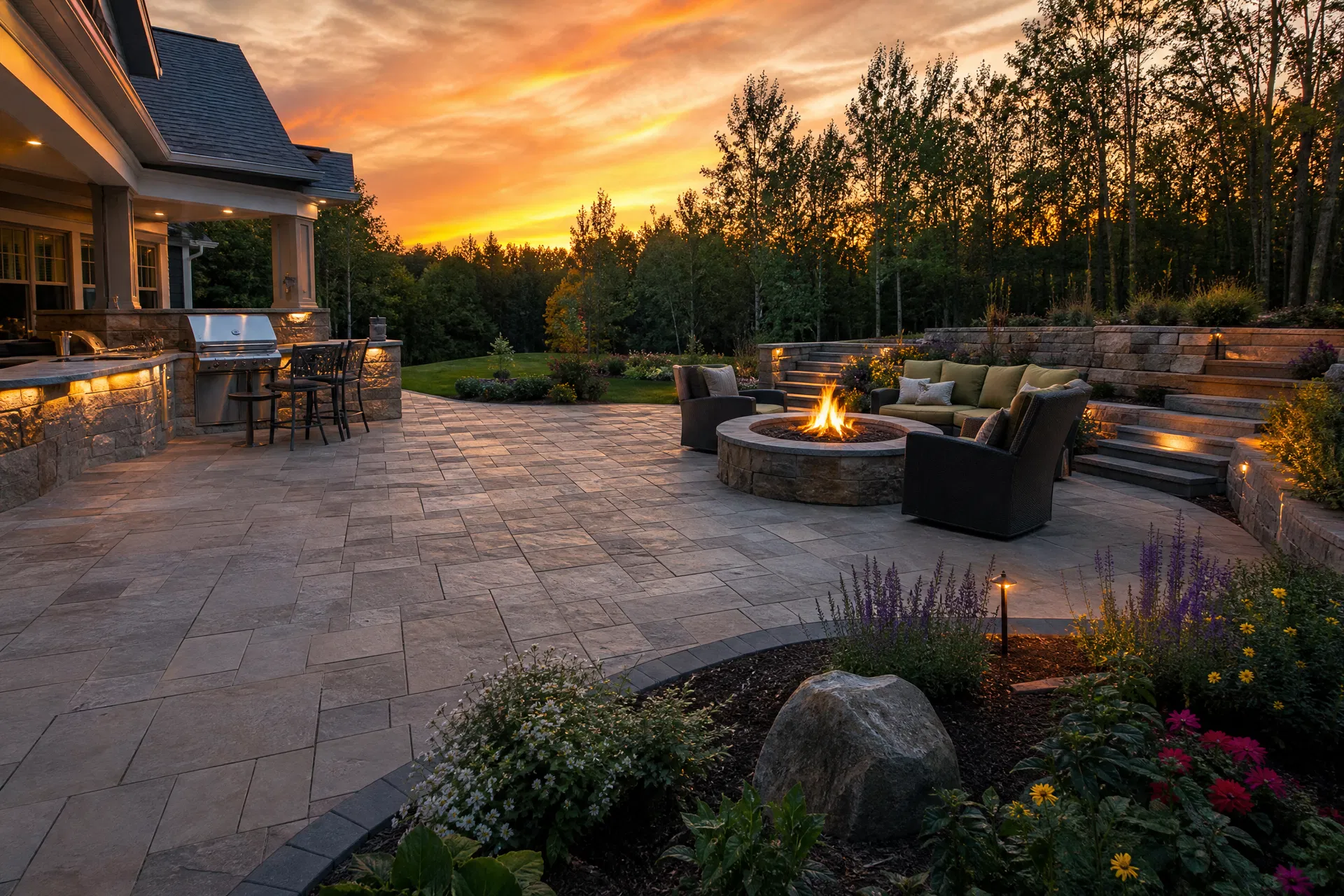
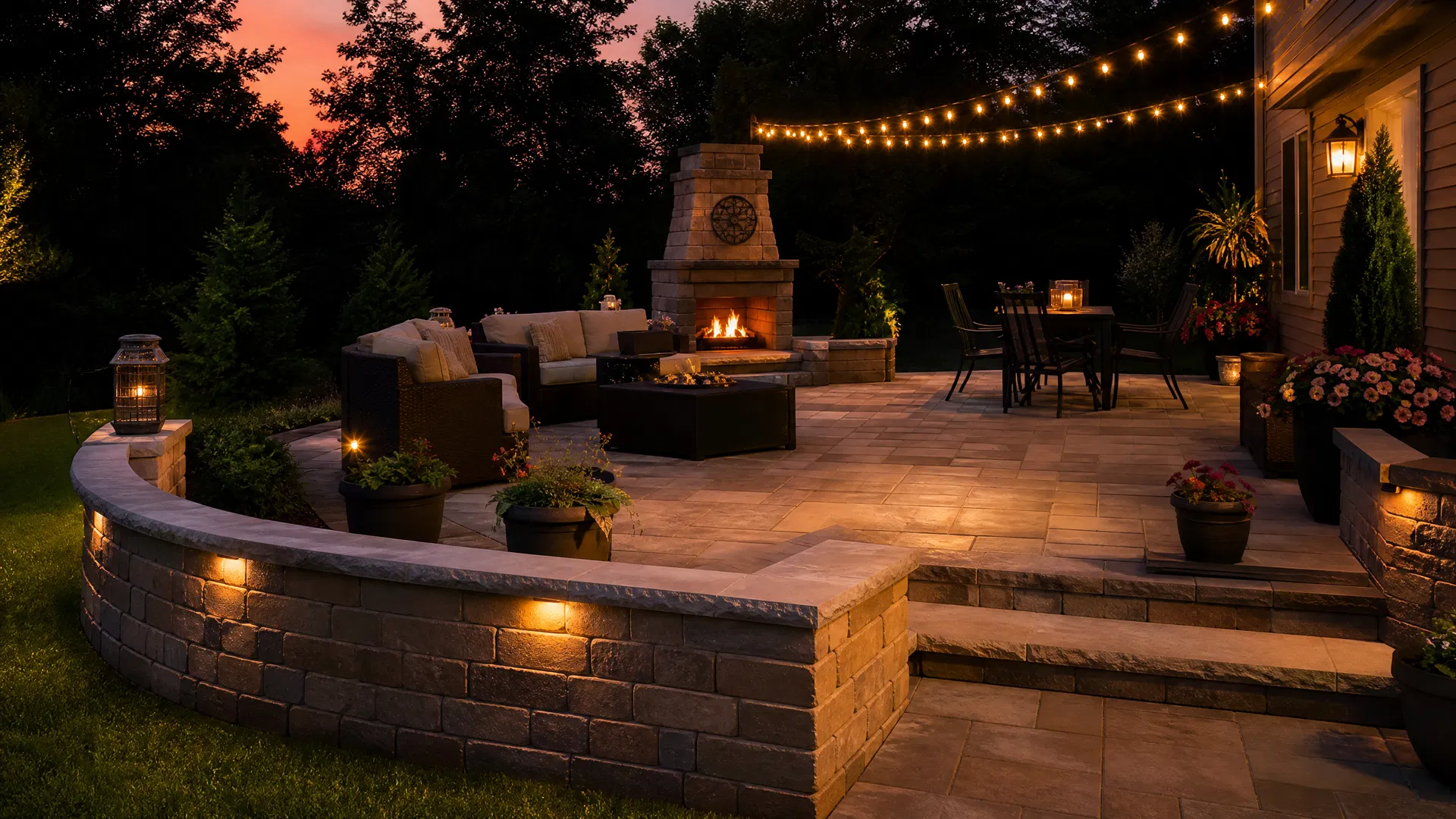
Completion photos are the core of the portfolio. They should be taken with a wide-angle lens on a clear day, ideally in the late afternoon when the light is warm. The space should be staged with furniture, plants, and any decorative elements that help the homeowner visualize how they would use it.
Lifestyle photos are the most powerful and the most underused. These are photos taken after the homeowner has been using the space for a few weeks or months, showing the space as it is actually lived in. A family having dinner on the patio, kids playing near the water feature, a couple sitting by the fire. These photos are harder to get but they convert at a significantly higher rate than empty completion photos because they help prospects visualize their own life in the space.
The In-Person Portfolio Presentation
The digital portfolio supports the sales process, but the in-person portfolio presentation is where the sale is actually made. Most hardscape salespeople show prospects their portfolio on a phone or tablet during the estimate visit. The companies that close at the highest rates have a more deliberate approach.
The most effective in-person portfolio presentations start with a discovery conversation. Before showing any photos, the salesperson asks the homeowner about their vision for the space, how they plan to use it, what their aesthetic preferences are, and what their budget range is. This information lets the salesperson select the three or four portfolio projects that are most relevant to the homeowner's specific situation.
Showing three targeted projects is more persuasive than showing thirty random ones. The homeowner who sees three projects that look exactly like what they described feels understood and confident. The homeowner who is shown a generic gallery of thirty projects feels like they are being shown a catalog rather than a tailored recommendation.
After showing the selected projects, the most effective salespeople ask a specific question: "Of these three, which one is closest to what you are imagining for your space?" This question does two things: it confirms that the salesperson understood the homeowner's vision, and it moves the conversation from "whether to do this project" to "what this project should look like," which is a much more productive place to be.
Using the Portfolio to Handle Price Objections
The most common objection in hardscape sales is price. The homeowner who says "that's more than I expected" is not necessarily unwilling to spend the money. They are uncertain whether the investment is worth it.
The portfolio is the most effective tool for handling this objection, but only if it is used correctly. The wrong response to a price objection is to defend the price or offer a discount. The right response is to show the homeowner a project at their budget level and ask: "Is this the quality of result you are looking for?" If the answer is yes, the price objection often dissolves because the homeowner can now see what they are getting for their money.
Turning Completed Projects Into Referral Engines
The most valuable thing a completed hardscape project can do for your business is generate referrals. A stunning patio or retaining wall is visible to every neighbor who walks by, every guest who visits, and every person who sees photos of it on social media. The before/after photo marketing guide covers how to document every project in a way that generates both referrals and organic reach on social media. The question is whether you have a system that converts that visibility into referrals.
The system starts with the completion conversation. When you walk through the finished project with the homeowner, ask them directly: "Do you have any neighbors or friends who have been asking about your project? We would love to meet them." Three months after the project is complete, send the homeowner a text message with a photo of their finished space and a brief note: "It has been a few months since we finished your project. We hope you are enjoying it. If any of your neighbors have asked about it, we would love to connect with them."
The Compounding Effect of a Strong Portfolio
A well-documented, well-organized portfolio compounds over time. Every project you complete adds to the asset library. Every neighborhood you work in adds to the geographic coverage. Every style you execute adds to the range of options you can show prospects.
The hardscape companies that have been building their portfolio systematically for three to five years have a significant competitive advantage over newer companies. That portfolio also powers their presence on Houzz and Pinterest - the Houzz and Pinterest marketing guide covers how to distribute your portfolio content on the platforms where high-budget homeowners do their research. When a prospect searches for hardscape contractors in their area and finds one company with 200 documented projects including several from their specific neighborhood, and another company with 20 generic photos, the choice is made before the first conversation.
Building this asset takes time, but the investment compounds. The photos you take today will be selling jobs three years from now. The reviews you generate from today's projects will be influencing prospects who have not yet started their research. The portfolio you build now is the foundation of the marketing system that will drive your growth for years to come.
Fannit's hardscape portfolio and content marketing program is built around the framework in this guide - the documentation standards, the organization system, and the distribution strategy that turns your project photos into a consistent lead generation engine. Schedule a free strategy call to see what it looks like for your company.
A strong portfolio is not just a sales tool - it is a marketing system. The best hardscape marketing agencies that understand this treat portfolio development as an ongoing service, not a one-time website build.

Keith Eneix is the Co-Founder and President of Fannit, a digital marketing agency built exclusively for home service contractors. He still owns and operates a multi-seven-figure contracting business in the Pacific Northwest. Since 2010, Fannit has helped 200+ contractors generate $100M+ in documented revenue.
Full Bio